Enterprise Software as a Service (SaaS) has transformed the way modern businesses operate, scale, and compete. From customer relationship management (CRM) platforms to cloud-based analytics and collaboration tools, SaaS solutions are now at the core of digital transformation strategies across industries. However, one of the most critical yet often misunderstood aspects of adopting SaaS at the enterprise level is pricing.
Enterprise SaaS pricing models are not just about cost—they reflect value delivery, scalability, usage behavior, and long-term business alignment. Choosing the wrong pricing model can lead to overspending, inefficiencies, or limited scalability. On the other hand, understanding how SaaS pricing works can help organizations optimize budgets, improve ROI, and support sustainable growth.
In this comprehensive guide, we will break down the most common enterprise SaaS pricing models, how they work, their advantages and disadvantages, and how businesses can choose the right model for their needs.
Why SaaS Pricing Models Matter for Enterprises
Enterprise organizations differ from small businesses in several key ways: they have more users, more complex workflows, stricter compliance requirements, and larger budgets. Because of this, SaaS pricing is rarely one-size-fits-all.
A well-structured pricing model ensures:
- Predictable IT spending
- Alignment between cost and usage
- Scalability as the business grows
- Better vendor relationships
- Clear ROI measurement
Poor pricing decisions, however, can result in:
- Overpaying for unused licenses
- Unexpected cost spikes
- Difficult scaling processes
- Inefficient resource allocation
Understanding SaaS pricing models is not just a finance decision—it’s a strategic business decision.
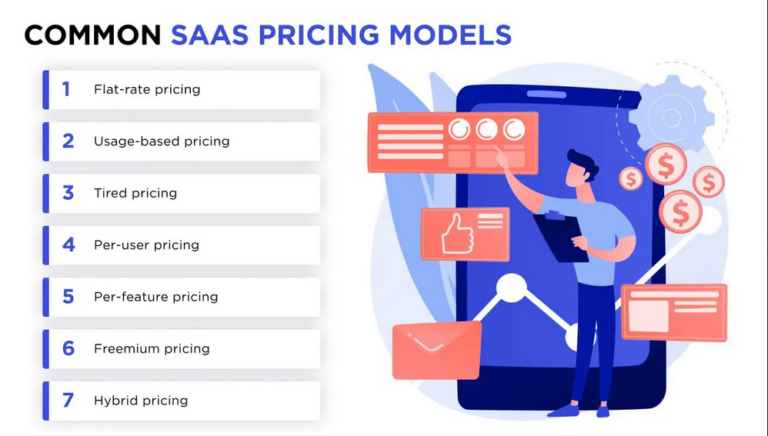
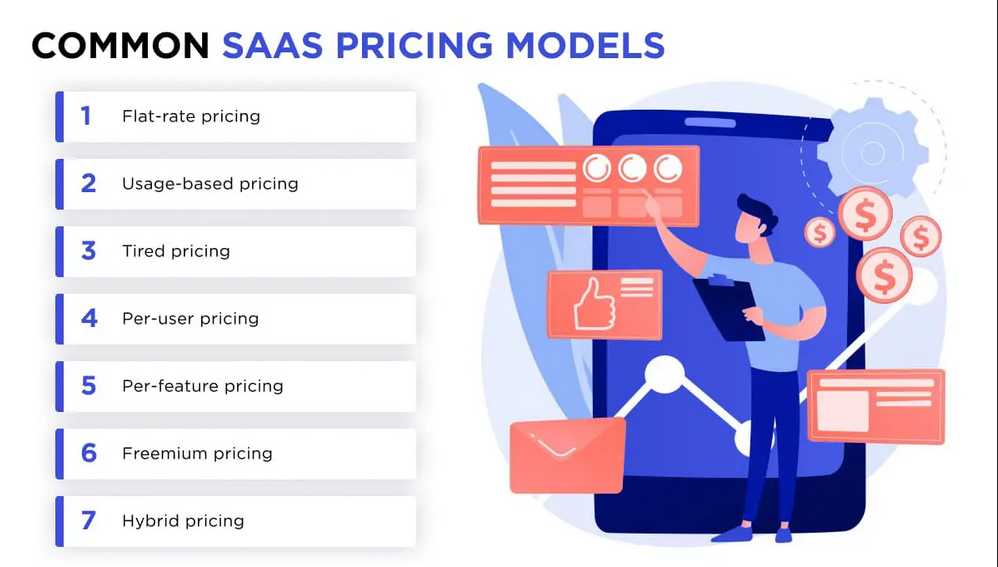
1. Flat-Rate Pricing Model
Flat-rate pricing is one of the simplest SaaS pricing structures. In this model, companies pay a fixed monthly or annual fee for access to the software, regardless of usage.
How It Works
Customers pay a single price for full access to the product and its features. For example, a SaaS platform might charge $500 per month for unlimited users and features.
Advantages
- Easy to understand and budget
- Predictable costs
- Simple billing structure
- Attractive for small to mid-sized enterprises
Disadvantages
- Not flexible for large enterprises
- Risk of overpaying or underpaying
- Limited customization
Best For
Flat-rate pricing is best suited for businesses with stable usage patterns and similar user needs across teams.
2. Per-User Pricing Model
The per-user pricing model (also known as seat-based pricing) is one of the most common SaaS pricing structures in enterprise environments.
How It Works
Companies pay based on the number of users accessing the software. For example, $20 per user per month.
Advantages
- Scales with team size
- Easy to understand and track
- Predictable incremental costs
- Encourages adoption across teams
Disadvantages
- Can become expensive at scale
- May discourage adding new users
- Not ideal for shared-user environments
Best For
CRM tools, project management platforms, and collaboration software often use this model effectively.
3. Tiered Pricing Model
Tiered pricing offers different packages with varying features and price points. Each tier is designed for different customer segments, from small businesses to large enterprises.
How It Works
A SaaS provider may offer:
- Basic plan ($50/month)
- Professional plan ($200/month)
- Enterprise plan ($1,000/month+)
Each tier includes progressively more features and support.
Advantages
- Flexible for different business sizes
- Encourages upselling
- Clear feature differentiation
- Scalable for enterprise growth
Disadvantages
- Can be confusing for customers
- Feature limitations may feel restrictive
- Enterprises may need custom plans anyway
Best For
Companies with diverse customer bases and varying needs across industries.
4. Usage-Based Pricing Model
Usage-based pricing (also called pay-as-you-go) charges customers based on how much they actually use the service.
How It Works
Costs are determined by measurable usage metrics such as:
- Data storage
- API calls
- Active sessions
- Transactions processed
Advantages
- Highly fair and flexible
- Scales with actual usage
- Attractive for startups and enterprises with fluctuating demand
- No wasted spending on unused capacity
Disadvantages
- Difficult to predict monthly costs
- Can become expensive with high usage spikes
- Requires careful monitoring
Best For
Cloud infrastructure platforms, data analytics tools, and API-based services.
5. Per-Feature Pricing Model
In this model, pricing is based on the features a customer selects rather than the number of users or usage volume.
How It Works
Each feature or module is priced separately. Customers can build a customized package.
Advantages
- High level of customization
- Customers only pay for what they need
- Flexible scaling of features
Disadvantages
- Complex pricing structure
- Difficult to compare plans
- Can lead to fragmented user experience
Best For
Enterprise platforms with modular capabilities such as HR systems, ERP software, and marketing automation tools.
6. Freemium Model
The freemium model offers a basic version of the software for free, with premium features available at a cost.
How It Works
Users can access limited functionality at no cost and upgrade when they need advanced features.
Advantages
- Low barrier to entry
- High user acquisition rate
- Encourages product adoption
- Strong marketing tool
Disadvantages
- High conversion pressure
- Free users may never upgrade
- Support costs for non-paying users
Best For
Collaboration tools, productivity apps, and SaaS products targeting mass adoption.
7. Custom Enterprise Pricing
Large enterprises often require tailored pricing models based on their specific needs, infrastructure, and compliance requirements.
How It Works
Pricing is negotiated directly with the vendor based on:
- Number of users
- Deployment scale
- Security requirements
- Integration complexity
- Support levels
Advantages
- Fully customized solution
- Dedicated enterprise support
- Better alignment with business needs
- Volume discounts
Disadvantages
- Lack of transparency
- Requires negotiation
- Longer sales cycle
Best For
Large corporations with complex IT environments and high compliance standards.
Key Factors That Influence SaaS Pricing
Understanding pricing models is not enough. Enterprises must also consider the factors that influence SaaS pricing:
1. Infrastructure Costs
Cloud hosting, storage, and computing resources significantly impact pricing structures.
2. Customer Support Level
24/7 enterprise support increases overall pricing.
3. Security & Compliance
Industries like finance and healthcare require stricter security, increasing costs.
4. Integration Requirements
More integrations with third-party systems often lead to higher pricing tiers.
5. Data Volume
The more data processed or stored, the higher the cost.
How to Choose the Right SaaS Pricing Model
Selecting the right pricing model depends on your business goals and usage patterns. Here are key considerations:
1. Evaluate Your Usage Patterns
Do you have stable usage or fluctuating demand?
2. Consider Scalability Needs
Will your user base grow rapidly in the next 1–3 years?
3. Analyze Budget Predictability
Do you prefer fixed costs or flexible spending?
4. Assess Feature Requirements
Do you need full access or modular features?
5. Compare Total Cost of Ownership (TCO)
Look beyond monthly fees and consider long-term costs.
Common Mistakes Enterprises Make
Many companies make avoidable mistakes when selecting SaaS pricing models:
- Choosing the cheapest option without scalability
- Ignoring hidden usage costs
- Overestimating or underestimating user growth
- Not negotiating enterprise contracts
- Failing to analyze ROI
Avoiding these mistakes can significantly improve SaaS investment outcomes.
Future Trends in SaaS Pricing
The SaaS pricing landscape is evolving rapidly. Some key trends include:
1. AI-Based Dynamic Pricing
Pricing that adjusts automatically based on usage and value.
2. Hybrid Pricing Models
Combination of usage-based and per-user pricing.
3. Outcome-Based Pricing
Customers pay based on results achieved, not just usage.
4. Greater Transparency
More vendors are moving toward clear, predictable pricing structures.
Conclusion
Enterprise SaaS pricing models play a critical role in shaping how organizations adopt and scale technology. From flat-rate and per-user pricing to usage-based and custom enterprise agreements, each model offers unique benefits and challenges.
The key to success lies in aligning the pricing model with your business strategy, operational needs, and growth plans. Enterprises that take the time to evaluate SaaS pricing carefully will gain better cost control, improved efficiency, and stronger long-term ROI.